Dr A Attlee (A.C.Evely)
Dr Anais Attlee (also known as Ana Attlee) is an interdisciplinary environmental researcher, educator, and entrepreneur whose work sits at the intersection of knowledge exchange, social learning, ecosystem governance, and mission-led enterprise. Across two decades, she has combined academic research and practice to design and deliver initiatives that strengthen how societies coordinate action in complex social-ecological systems — from conservation and ecosystem services to public engagement, ethical consumer products, and housing provision, she has proven you can self fund impact without starting capital across many areas.

Academic focus: knowledge exchange, social learning, and ecosystem governance
Ana’s academic work has helped shape understanding of how research, policy and practice can collaborate more effectively in environmental management. She has published influential peer-reviewed research on knowledge exchange and evaluation in interdisciplinary, multi-stakeholder contexts, social learning and participation in conservation, and the role of shared and social values in ecosystem decision-making. Her more recent work extends these foundations into the rapidly evolving arena of ecosystem markets and payments for ecosystem services, exploring how market mechanisms can be coordinated to deliver landscape-scale public benefits while avoiding perverse outcomes and unintended trade-offs.
Her research career has been characterised by collaboration with leading scholars in the field, including Prof Mark S. Reed, Prof Ioan Fazey, and Prof Lindsay C. Stringer, contributing to frameworks and practice principles that have influenced both academic thinking and real-world implementation across environmental management.
Research fellowships, training, and applied impact
From 2010–2011, Anna served as a Research Fellow in Knowledge Exchange at the University of St Andrews, working alongside Prof Mark Reed, Prof Ioan Fazey and Prof Lindsay Stringer to develop and communicate principles for effective knowledge exchange in environmental management. Building on this work, she helped establish resources and training through the Sustainable Learning initiative, combining working papers, films and practical tools to support researchers and practitioners to increase real world impact.
In 2013–2014 and beyond, the knowledge exchange work developed into widely delivered training programmes for universities, research councils and environmental organisations internationally — supporting researchers, programme managers and decision-makers across major Universities, Institutions and agencies. In 2015, Ana co-founded Fast Track Impact, developing training for researchers to translate knowledge into action and increase the societal impact of their work.
Enterprise as applied conservation: Project Maya and Seedball
Alongside academic research, Ana is the CEO and co-founder of Project Maya (2010–present), an environmental Community Interest Company founded with conservation scientists to build a global network of community-rooted, permaculture-inspired nature reserves (“Maya Reserves”). Project Maya’s creates holistic spaces where people and nature thrive together in harmony, drawing on best-practice research and Ana’s own work on public participation, social learning and conservation impact.
To generate funding and mass participation in habitat creation, Ana co-founded Seedball (2012–present) following training on the NERC Environment Young Entrepreneur scheme. Seedball is a mission-led wildflower gardening company designed to make it radically easier for people to grow native wildflowers and increase habitats for pollinators. The product translates ecological insight into an accessible behaviour-change tool: “throw and grow,” with mixes tailored to different species and environments, enabling nature to select which species thrive in each spot.
Under Ana’s leadership as Founder and Co-Managing Director, Seedball has grown into a Multi award winning venture and a recognised name in wildlife gardening. Seedball has been stocked in over 500 shops and garden centres, including major national institutions such as the National Trust and Kew Gardens, and has supported a wide range of environmental campaigns and collaborations with NGOs, charities and mission-aligned partners. Through Project Maya and Seedball, Ana has also delivered education via the Maya Academy and supported environmental and wildflower campaigns in collaboration with organisations such as the Wildlife Trust, The BBC, PTES, The Royal Entomological Society, RSPB, WWF, Plantlife, Friends of the Earth and others, alongside collaborations with prominent figures across the UK, such as Dale Vince & Vivienne Westwood.
Systems design across society: housing, property and ethical supply chains
Ana’s work has consistently focused on practical systems that improve life outcomes for people and planet. She is the founder and director of Collingwood Property (2015–present), bringing empty and underused properties back into use, with a strong focus on social housing provision and high-quality service. She also founded New Chapter Housing (2019–2026), providing housing for homeless and vulnerable people through structured, professional provision.

Her entrepreneurial work has extended into ethical consumer supply chains as founder of Collingwood Organics (2015–2018), developing a premium sustainable organic beauty brand rooted in indigenous knowledge, ethical sourcing, and reinvestment into communities and ecosystems — including sourcing linked to the Arganeraie UNESCO Biosphere Reserve and funding women’s groups in Morocco.
Teaching, facilitation, and early career foundations
Ana’s grounding in education and facilitation began early. She served as one of the UKs Youngest Lecturers age 21, full-time FE/HE lecturer in Animal Management (2003–2004) and then as a part-time HE/FE lecturer (2003–2007), coordinating and delivering teaching across numerous FE and undergraduate modules spanning animal conservation, ethics, business, law, and management. She later supported higher education teaching as a guest lecturer and demonstrator at the University of Aberdeen and Aberystwyth University (2007–2009), including Wildlife Management (MSc) and Conservation Biology.
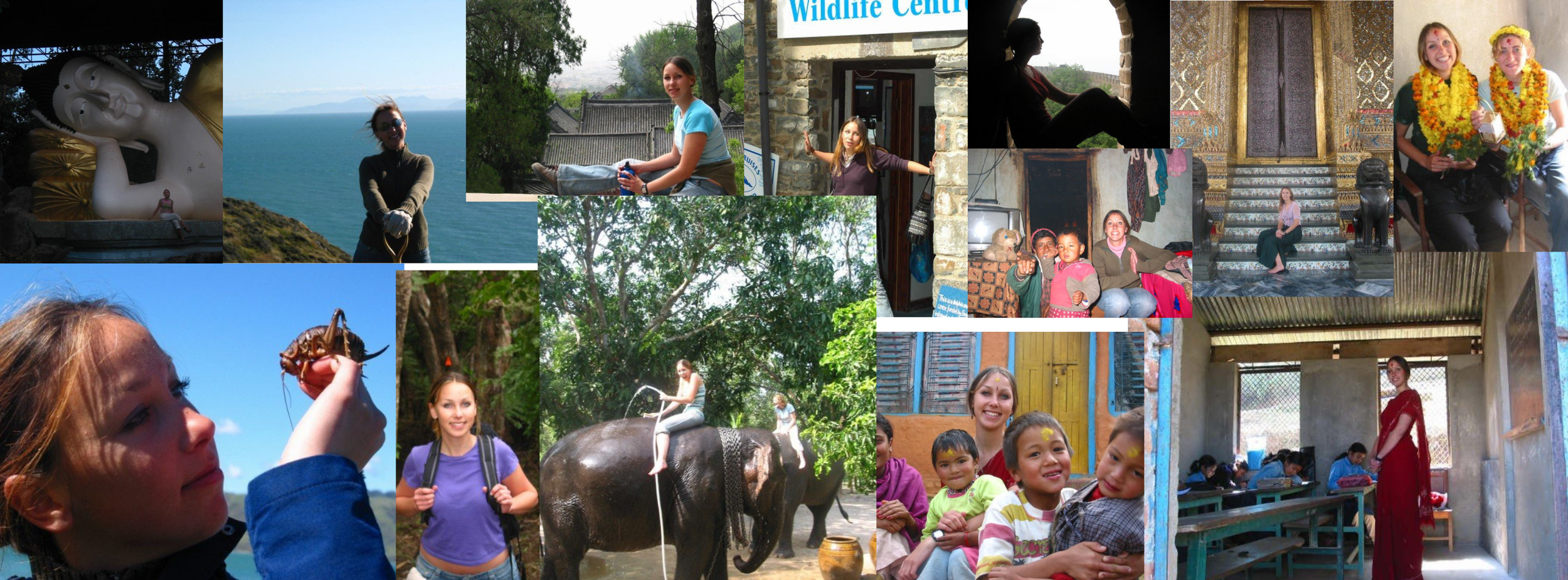
In 2004–2005, Ana undertook international community conservation placements across New Zealand, Thailand, Nepal, China and the UK, contributing to teaching, research, and participatory conservation activity. She also played a major role in planning and coordinating ACES 2011, an Ambitious International Interdisciplinary Conference on conservation conflict that convened social and natural scientists, policy makers, artists, and global conservation leaders for interdisciplinary learning, debate and discovery.
Through-line
Across enterprise, academia and social infrastructure, the through-line of Ana’s work is a commitment to designing structures that endure: integrating evidence, values, governance and incentives so that collaboration becomes easier, outcomes become fairer, and public benefits can be sustained at scale.
Selected leadership roles (chronological highlights)
CEO & Co-Founder, Project Maya (Aug 2010–present)
Research Fellow in Knowledge Exchange, University of St Andrews (Oct 2010–Nov 2011)
Founder & Co-Managing Director, Seedball (Jan 2012–present)
Director, River of Flowers (Dec 2012–Mar 2015)
Founder, Collingwood Property (Aug 2015–present)
CEO & Co-Founder, Collingwood Organics (May 2015–May 2018)
Co-Founder, Fast Track Impact (Mar 2015–present)
Founder & Director, New Chapter Housing (Jun 2019–2026)
Selected publications (A.C. Evely / A. Attlee)
Ecosystem markets and payments for ecosystem services
Integrating ecosystem markets to co-ordinate landscape-scale public benefits from nature. PLOS ONE (2022).
Reed, M.S., Allen, K., Attlee, A., et al. A place-based approach to payments for ecosystem services. Global Environmental Change (2017) 43: 92–106.
Shared and social values; ecosystem services
What are shared and social values of ecosystems? Ecological Economics (2015).
Reed, M.S., Evely, A., et al. Anticipating and managing future trade-offs and complementarities between ecosystem services. Ecology & Society (2013).
Knowledge exchange and evaluation
Reed, M.S., Stringer, L.C., Fazey, I., Evely, A.C., Kruijsen, J. Five principles for the practice of knowledge exchange in environmental management. Journal of Environmental Management (2014) 146: 337–345.
Fazey, I., et al. Evely, A.C. Evaluating knowledge exchange in interdisciplinary and multi-stakeholder research.Global Environmental Change (2014) 25: 204–220.
Fazey, I., Evely, A.C., et al. Knowledge exchange: a review and research agenda for environmental management.Environmental Conservation (2013).
Reed, M.S., Evely, A.C., et al. What is social learning? Ecology & Society (2010).
Knowledge management and land degradation
Reed, M.S., et al. Evely, A.C. Cross-scale monitoring and assessment of land degradation and sustainable land management: a methodological framework for knowledge management. Land Degradation & Development (2011).
Reed, M.S., et al. Evely, A. Knowledge management for land degradation monitoring and assessment: an analysis of contemporary thinking. Land Degradation & Development (2011/2013).
Participation and conservation impact
Evely, A.C., Fazey, I., Reed, M.S., Pinard, M. High levels of participation in conservation projects enhance learning. Conservation Letters (2010).
Raymond, C.M., et al. Evely, A.C. Integrating local and scientific knowledge for environmental management.Journal of Environmental Management (2010).
Evely, A.C., et al. Defining and evaluating the impact of cross-disciplinary conservation research. Environmental Conservation (2010).
Evely, A.C., et al. The influence of philosophical perspectives in integrative research: a conservation case study in the Cairngorms National Park. Ecology & Society (2008).
Books, chapters and reports (selected)
Attlee, A., Reed, M.S., Adams, D., Lambert, E. (2015). Sustainability 2.0: New strategies for achieving behaviour change in a more connected world. In: Kopnina & Shoreman-Ouimet (eds.), Sustainability: Key Issues. Routledge.
Reed, M., Evely, A., et al. (2011). Putting knowledge into action: Managing knowledge to combat desertification.UNCCD briefing note.
Shared, Plural and Cultural Values. UK National Ecosystem Assessment Follow-on (Work Package Report 6).